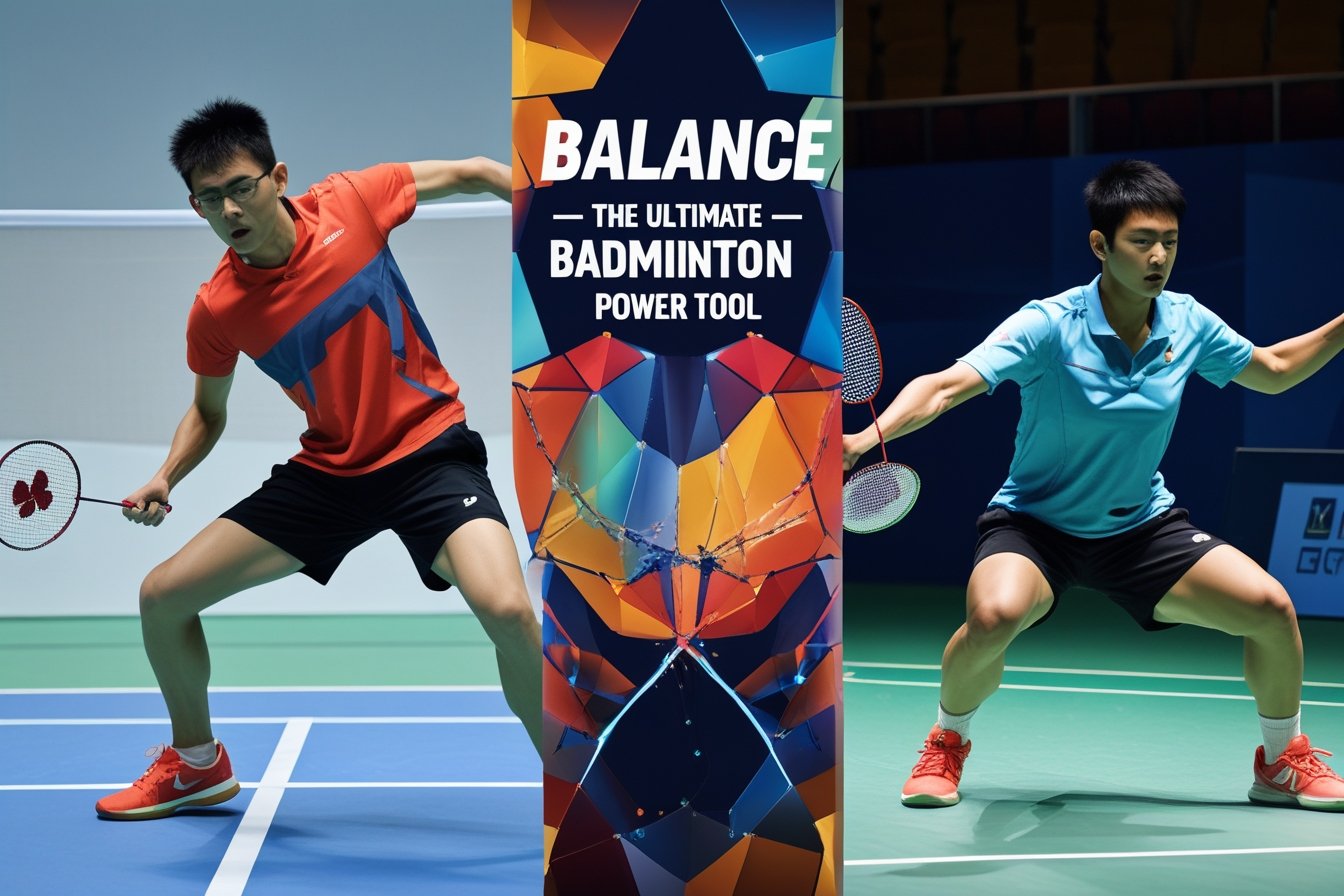
Ever wondered why some badminton players effortlessly glide across the court while delivering devastating smashes, while others struggle to maintain stability during basic shots? The secret weapon isn’t just technique or strength, it’s balance, the most underrated yet powerful tool in badminton that can transform your game from amateur to professional level overnight.
The Hidden Science Behind Badminton’s Greatest Asset:
Balance forms the foundation of every successful badminton shot, yet most players focus solely on power and speed. Think of balance as the invisible thread that connects all your movements, creating a seamless flow from defense to attack. When you master badminton balance techniques, you unlock the ability to generate maximum power while maintaining perfect control.
The human body operates like a sophisticated machine, and balance training for badminton teaches this machine to function at peak efficiency. Every lunge, every smash, every deceptive drop shot relies on your body’s ability to maintain equilibrium while generating explosive force. Professional players understand that balance and power in badminton aren’t separate elements, they’re two sides of the same coin.
Research shows that players with superior balance can generate 30% more power in their shots while reducing injury risk by 40%. This isn’t a coincidence; it’s biomechanics in action. When your body maintains optimal balance, energy transfers efficiently from your core through your arms to the racket, creating the devastating power that separates champions from casual players.
Your Body’s Natural Stability System:
Your core muscles act as the command center for badminton balance control. Unlike gym exercises that isolate specific muscles, badminton requires integrated strength where every muscle group works in harmony. The transverse abdominis, multifidus, and diaphragm create what sports scientists call the “inner unit”, your body’s natural stability system.
When you execute a cross-court smash, your core muscles fire microseconds before your arm muscles, creating a stable platform for power generation. This is why players with weak cores often struggle with consistency, regardless of their arm strength. Balance exercises for badminton players specifically target this integration, teaching your nervous system to coordinate complex movements automatically.
The magic happens in the transition phases, those split seconds between shots where your body repositions itself. Elite players make these transitions look effortless because their balance training has programmed their bodies to maintain stability during rapid direction changes. This automatic balance response is what allows them to focus entirely on shot selection and execution.
The Footwork Revolution:
Traditional badminton coaching focuses on footwork patterns, but the real secret lies in balanced footwork techniques. Every step should contribute to your overall stability while positioning you for the next shot. Think of your feet as sensors constantly gathering information about the court surface, body position, and upcoming movements.
Advanced badminton balance drills teach players to maintain their center of gravity over their base of support, even during explosive movements. This isn’t just about not falling down, it’s about maintaining optimal body position for maximum power generation. When your balance is perfect, every shot becomes more potent because your body can channel energy efficiently.
The concept of “dynamic balance” revolutionizes how players approach movement. Instead of static positions, you learn to maintain equilibrium while in motion. This skill transforms defensive positions into offensive opportunities, allowing you to generate power from seemingly impossible angles. Professional players use this dynamic balance to create shots that appear to defy physics.
The Strategic Balance Game:
Balance extends beyond physical stability to strategic positioning. Master players understand that court position isn’t just about reaching the shuttle, it’s about maintaining optimal balance for both current and future shots. This strategic balance involves:
- Spatial awareness: Understanding where you are in relation to the court boundaries and your opponent
- Temporal balance: Timing your movements to maintain stability throughout the rally
- Energy balance: Conserving energy while maintaining readiness for explosive movements
- Tactical balance: Positioning yourself to respond to multiple shot options
The best players develop what coaches call “court sense”, an intuitive understanding of how balance affects their strategic options. They position themselves not just to reach the current shot, but to maintain optimal balance for potential follow-up shots. This forward-thinking approach to badminton balance training separates good players from great ones.
The Psychological Power of Balance:
Physical balance directly impacts mental stability. When your body feels stable and controlled, your mind can focus entirely on tactical decisions and shot execution. Balance training for badminton creates a positive feedback loop where physical stability enhances mental clarity, which in turn improves decision-making under pressure.
Anxiety and tension destroy balance faster than any physical challenge. Players who struggle with nerves often lose their natural balance, leading to awkward movements and poor shot selection. Training your balance system also trains your nervous system to remain calm under pressure, creating the mental toughness that champions display in crucial moments.
The connection between balance and confidence cannot be overstated. When you know your body can maintain stability in any situation, you approach shots with greater aggression and creativity. This confidence translates into more powerful shots and better tactical decisions throughout the match.
The Power Generation Matrix:
Balance serves as the foundation for all power generation in badminton. Without proper balance, even the strongest players cannot access their full potential. The power generation process follows a specific sequence:
The process begins with your feet establishing a stable base. Your core muscles then create a rigid platform, allowing your shoulders and arms to generate rotational force. Finally, your wrist adds the finishing touch, transferring all this accumulated energy to the shuttlecock. If any link in this chain lacks stability, power dissipates throughout the system.
Elite players understand that balance and power in badminton work together multiplicatively, not additively. A player with moderate strength but excellent balance will consistently outperform a stronger player with poor balance. This principle explains why technique often trumps raw power in badminton.
Building Your Balance Empire:
Effective balance training for badminton must address multiple components simultaneously. Single-leg stands and balance boards provide basic stability training, but badminton-specific balance requires sport-specific exercises. Here’s how to structure your training:
Phase 1: Foundation Building:
- Static balance exercises on unstable surfaces
- Core strengthening with emphasis on stability
- Proprioceptive training to enhance body awareness
- Basic balance challenges with eyes closed
Phase 2: Dynamic Integration:
- Balance exercises combined with badminton movements
- Reaction training with balance challenges
- Multi-directional stability training
- Balance maintenance during fatigue
Phase 3: Game Application:
- Sport-specific balance drills
- Competition simulation with balanced focus
- Advanced proprioceptive challenges
- Integration with technical shot training
The key is progressive overload, gradually increasing the complexity and difficulty of balance challenges while maintaining perfect form. This systematic approach ensures that your balance improvements transfer directly to game performance.
Technology and Balance:
Modern technology has revolutionized badminton balance training. Force plates measure weight distribution during movements, providing objective feedback about balance deficiencies. Virtual reality systems create immersive training environments where players can practice balance skills without physical fatigue.
Wearable sensors track movement patterns during play, identifying moments when balance breaks down. This data helps coaches design individualized training programs targeting specific balance weaknesses. The integration of technology with traditional training methods creates a more effective and efficient balance of development.
Balance training apps provide guided exercises and progress tracking, making high-quality balance training accessible to players at all levels. These tools democratize elite training methods, allowing amateur players to access the same balanced development techniques used by professionals.
Recovery and Balance:
Balance plays a crucial role in recovery and injury prevention. When your body maintains proper balance during training and competition, it experiences less stress and strain. This reduced stress accelerates recovery and decreases injury risk, allowing for more consistent training and better long-term development.
Proper balance reduces compensatory movement patterns that often lead to overuse injuries. When your body moves efficiently, no single muscle group becomes overworked, distributing stress evenly throughout the kinetic chain. This balanced stress distribution is essential for career longevity in badminton.
Balance training also enhances the recovery process by improving circulation and reducing muscle tension. The neuromuscular control developed through balance training helps maintain proper movement patterns even when fatigued, preventing the breakdown in form that often leads to injury.
Balance as Your Secret Weapon:
In competitive badminton, marginal gains often determine victory. Balance training provides one of the most significant marginal gains available to players at all levels. While opponents focus on power and speed, you develop the stability that makes power and speed truly effective.
The psychological advantage of superior balance cannot be ignored. When you move with confidence and stability, you project strength and control to your opponent. This psychological pressure often forces opponents into errors, providing free points throughout the match.
Elite players use balance as a tactical weapon, maintaining perfect stability while their opponents struggle with control. This stability advantage allows them to play more aggressive shots with less risk, creating a significant tactical advantage throughout the match.
Conclusion:
Balance isn’t just another training component, it’s the ultimate power tool that unlocks your full badminton potential. By developing superior balance through targeted training, you gain the foundation for more powerful shots, better court coverage, and enhanced mental toughness. The investment in balance training for badminton pays dividends in every aspect of your game, from recreational play to elite competition.
FAQs:
Q1: How long does it take to see improvement in badminton balance?
Most players notice improved stability within 2-3 weeks of consistent balance training.
Q2: Can balance training really increase shot power?
Yes, proper balance allows for more efficient energy transfer, increasing shot power by up to 30%.
Q3: What’s the most effective balance exercise for badminton players?
Single-leg stands on unstable surfaces while practicing shadow badminton movements.
Q4: Should beginners focus on balance before learning shots?
Absolutely, balance forms the foundation for all other badminton skills.
Q5: How often should I do balance training?
Daily 10-15 minute sessions provide optimal balance development for badminton players.
Q6: Does age affect balance training effectiveness?
Balance training is beneficial at any age, though younger players typically see faster improvements.